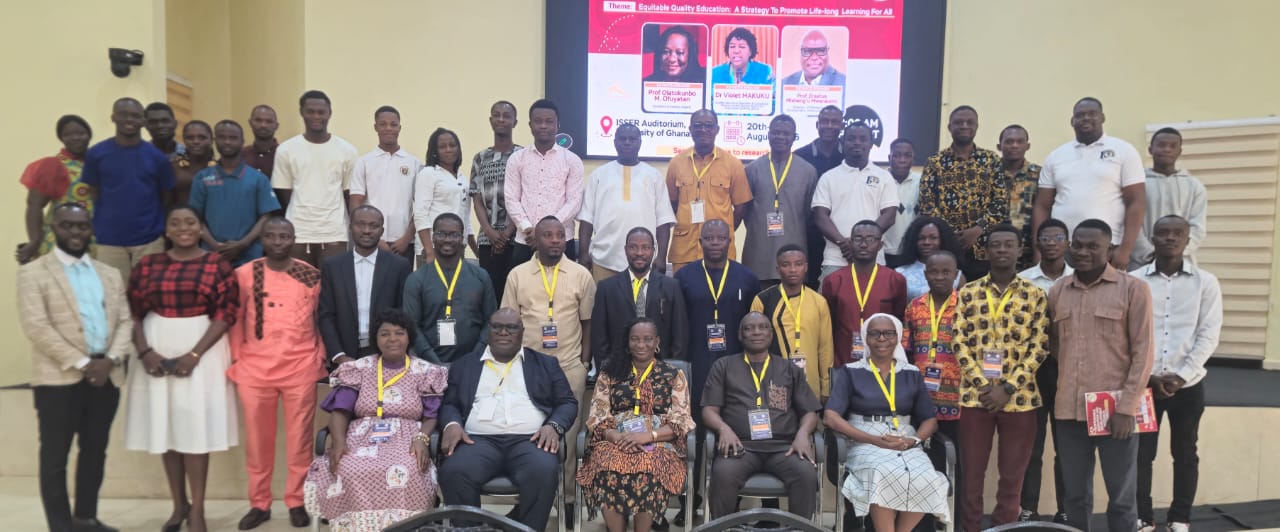
Participants in a group photograph after the conference
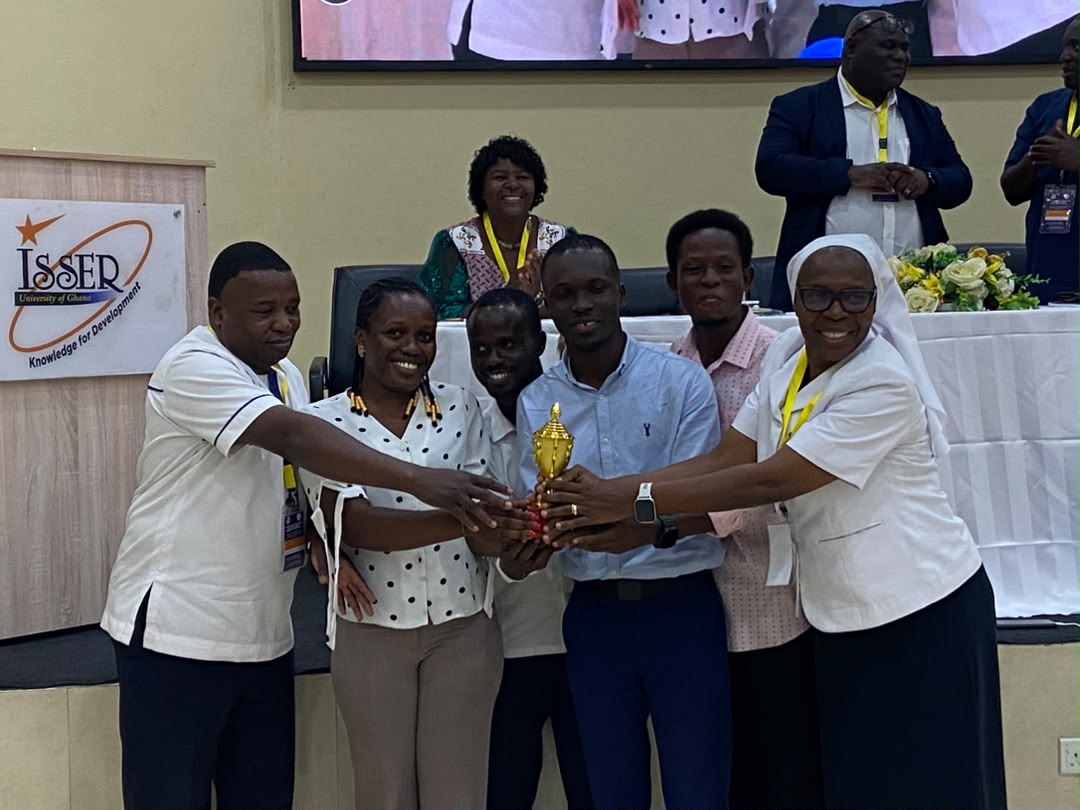
Five Level 400 Mathematics Education students of the Department of Teacher Education, School of Education and Leadership (SEL), College of Education, University of Ghana, have won the “Most Innovative Research of the Year” award at the 15th Sustainable Education and Development Research Conference (SEDRC 2026) for developing a QR Code Smart Attendance system.
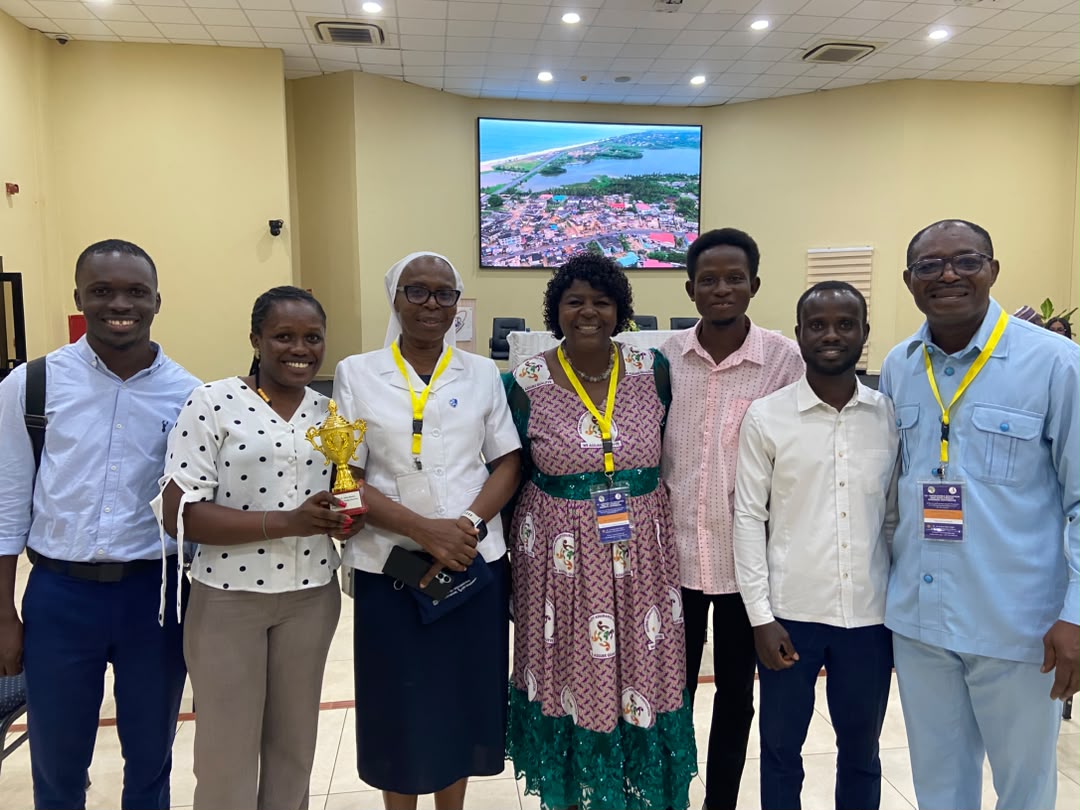
The award-winning students in a group photograph with their professors following their recognition at SEDRC 2026
The students, Abor Matilda, Albert Yesudufia Adolga, Essuma Kelvin, Kesse Samuel and Ato Mensah Godfred, were recognised at the conference held from 20 to 22 August 2026 at the ISSER Conference Room, University of Ghana, Legon. Their innovation is designed to make attendance management more efficient, particularly in large lecture classes.

The award-winning project, titled “QR Code Smart Attendance”, was developed as part of EDMA 408: Introduction to STEM Education for Mathematics Teachers, taught by Rev. Sr. Prof. Florence C. Awoniyi.
The project emerged from a classroom assignment that required students to identify a real-world challenge and develop a practical STEM-based solution. The team identified the time and effort involved in manually recording attendance in large classes and developed a website that enables students to register their attendance by scanning a QR code displayed by the lecturer.
According to the students, the system can register attendance for classes of 1,000, 2,000 or more students within approximately 10 minutes, potentially reducing the administrative burden associated with attendance management.
The project was presented at SEDRC 2026, following encouragement from Rev. Sr. Prof. Awoniyi. The conference brought together academics, researchers, education professionals and development practitioners to explore innovative approaches to advancing equitable and sustainable education.
The students’ demonstration attracted interest from participants both onsite and online, including researchers and academics from Ghana and other African countries. Several participants expressed interest in adopting or subscribing to the system for use in their institutions.
Speaking at the event, Rev. Sr. Prof. Awoniyi stated that the project reflected the student-centred approach of EDMA 408, which encourages students to identify real-world problems and apply STEM principles to develop practical solutions.
The recognition highlights the impact of experiential learning in equipping students with problem-solving and innovation skills. It also demonstrates how classroom projects can evolve into practical solutions with potential applications beyond the University.