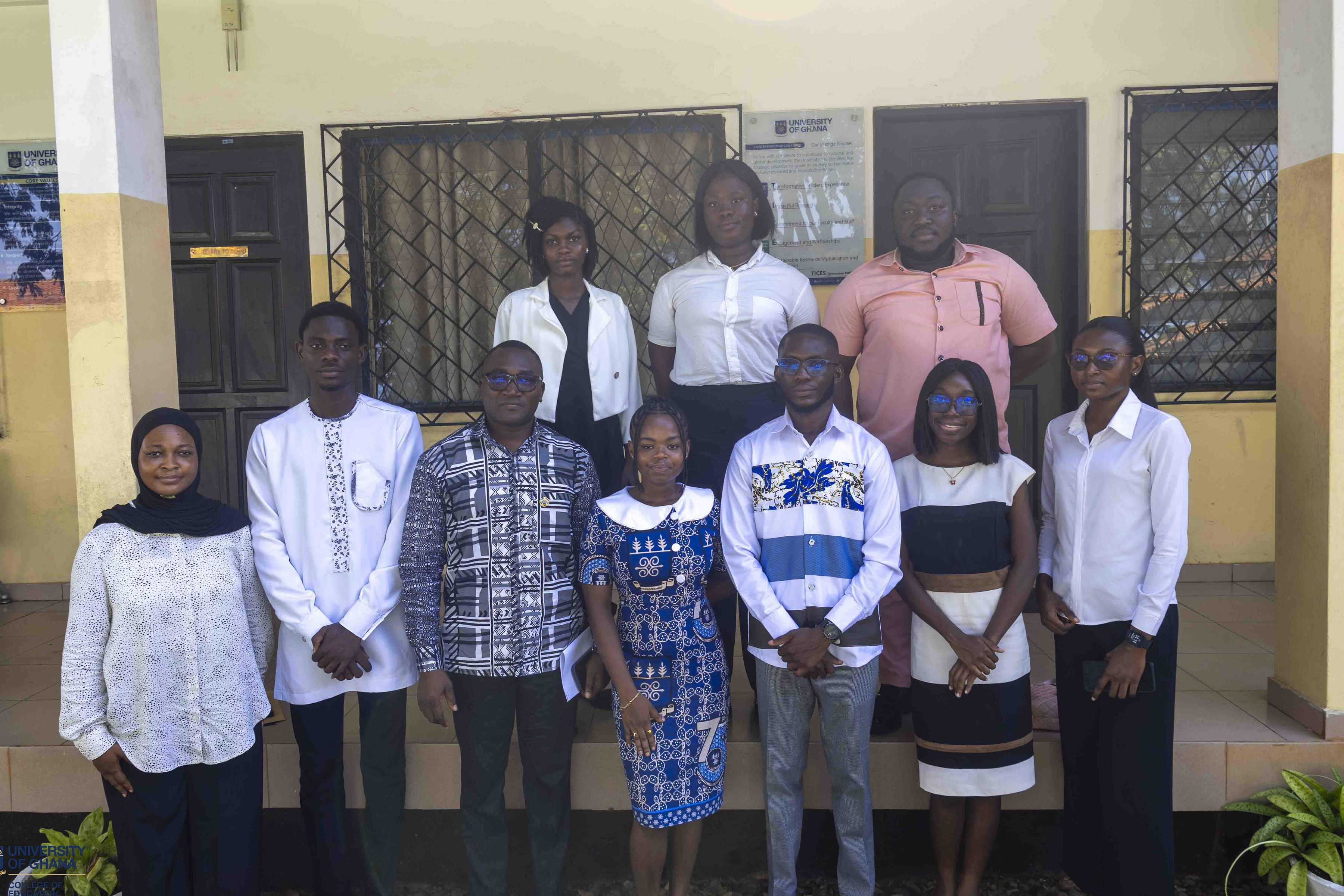
The Legon Centre for Education Research and Policy (LECERP), in partnership with the Ghana Commission for UNESCO, has inaugurated the UNESCO Club - University of Ghana Chapter, signalling a renewed commitment to youth empowerment, global citizenship and sustainable development.
The inauguration, held at the University of Ghana, brought together officials from the Ghana Commission for UNESCO, Management of the College of Education, faculty members, students and invited guests to celebrate what speakers described as a timely and strategic initiative aimed at equipping young people to become active contributors to national and global transformation.
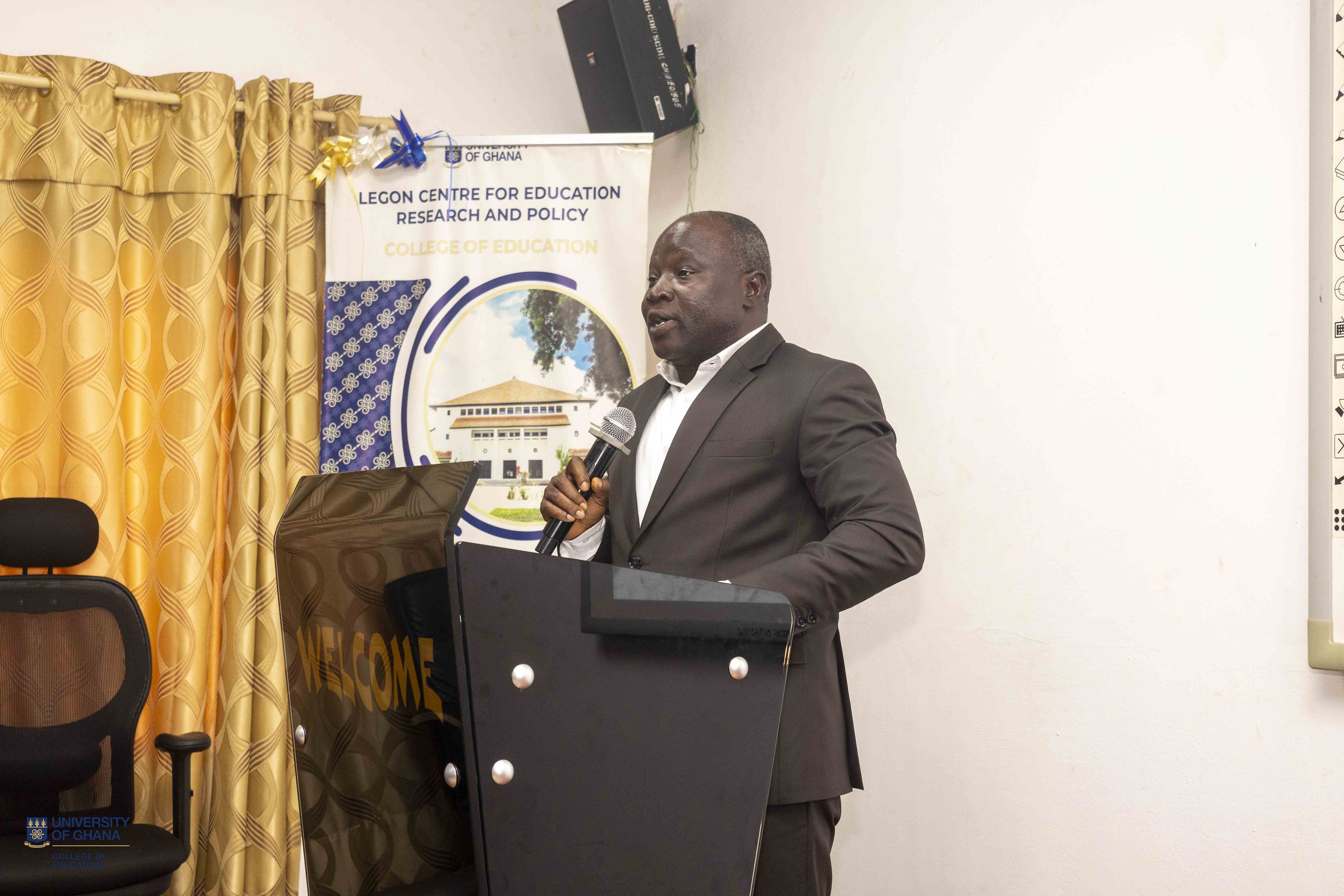
Dr. Clement Adamba, Director of LECERP
Delivering the welcome address, Dr. Clement Adamba, Director of LECERP, described the launch of the Club as the culmination of a growing collaboration between the Centre and the Ghana Commission for UNESCO. According to him, LECERP’s work in research, policy engagement and professional training aligns naturally with UNESCO’s broader mission of promoting education, peace and sustainable development.
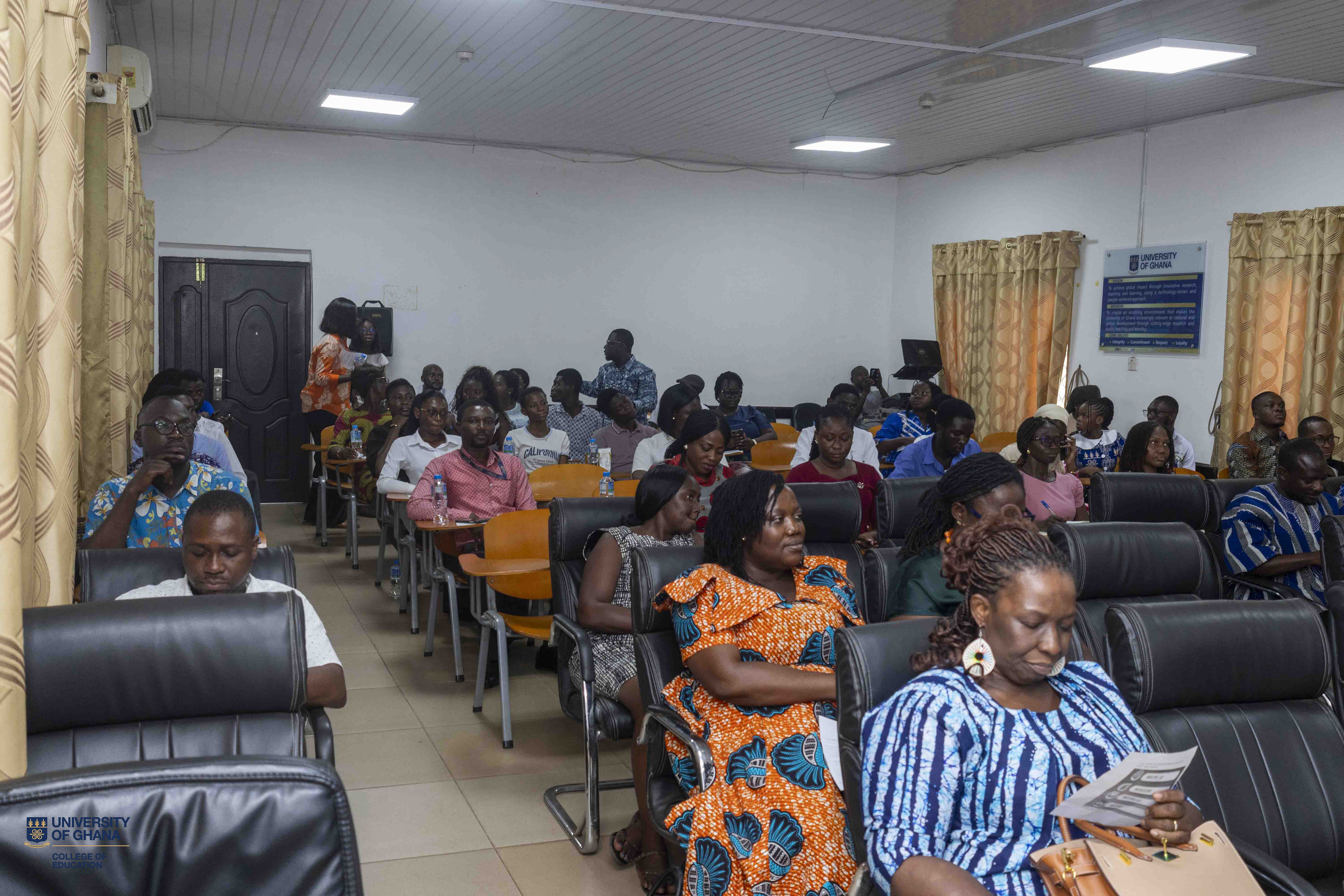
Guest seated at the ceremony
He highlighted existing collaborations between the two institutions, including policy advocacy activities and the observance of international events such as International Literacy Day and World Teachers’ Day. Dr. Adamba also announced plans by LECERP to introduce short courses in Educational Law and Peace Education for both pre-service and in-service teachers, explaining that the initiative seeks to strengthen values-based education and address gaps in teacher preparation in Ghana.
“The Club will serve as a vibrant space for collaboration and innovation, equipping students to engage critically with both local and global challenges,” he stated, while expressing confidence in the newly sworn-in student executives.
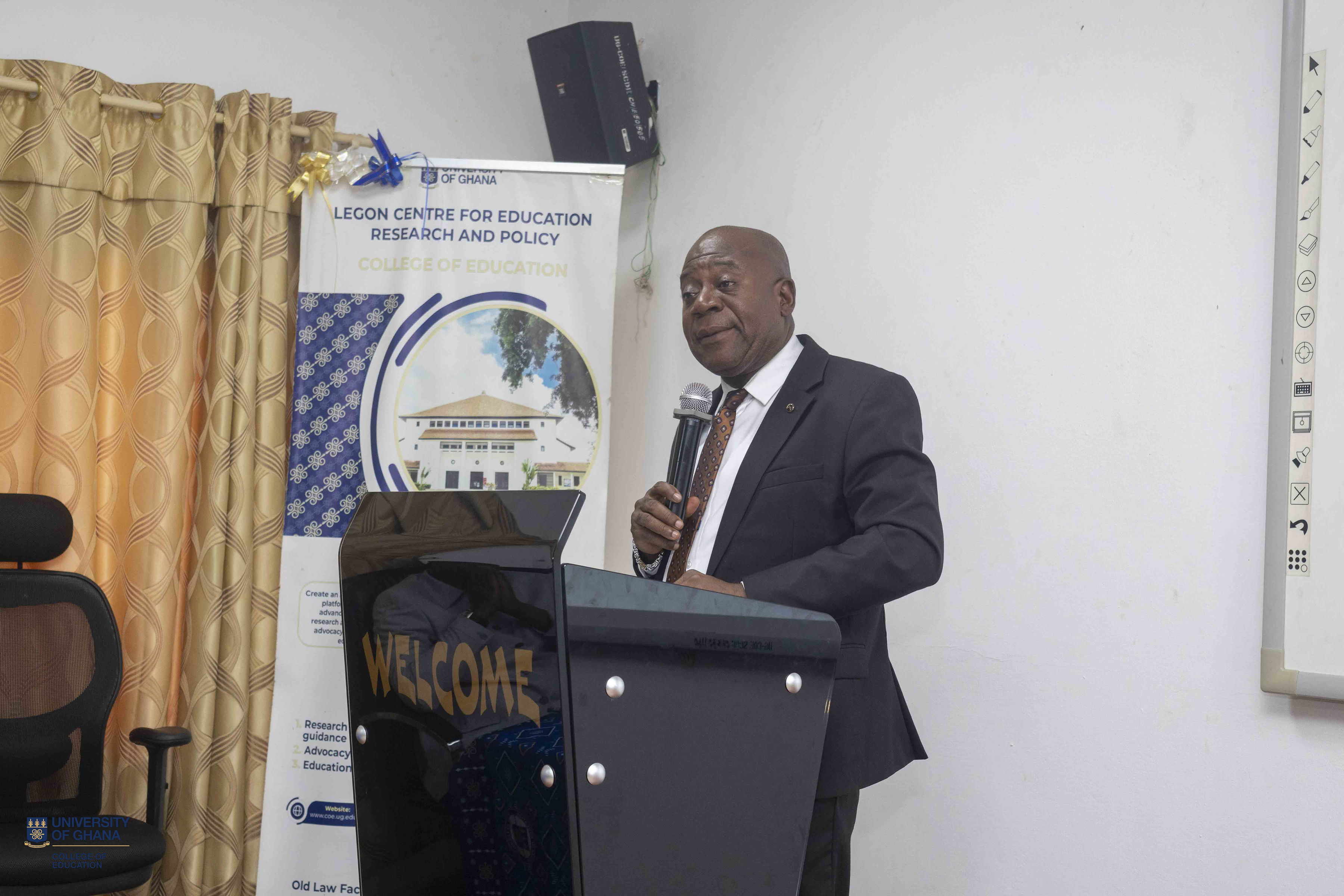
Prof. Samuel Nii Ardey Codjoe, Provost of the College of Education
Chairing the ceremony, Prof. Samuel Nii Ardey Codjoe, Provost of the College of Education, explained that the UNESCO Club was an important platform for promoting equity, solidarity, human rights and sustainable development within the University community.
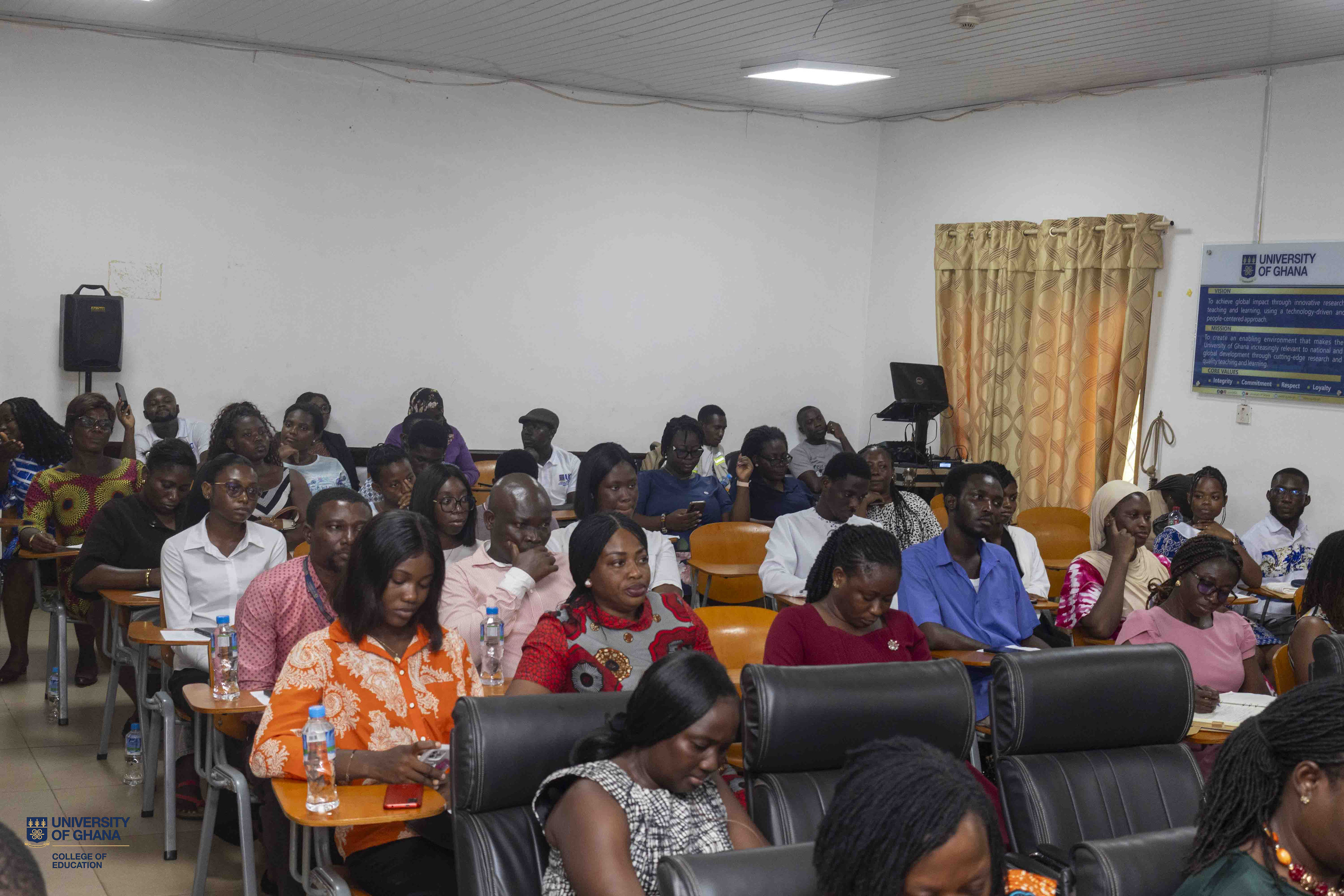
A cross-section of guests at the event
He noted that the initiative aligns with the University of Ghana Strategic Plan (2024–2029), particularly its focus on transformative student experience and engagement and partnerships. Prof. Codjoe commended LECERP for spearheading the initiative and praised the Ghana Commission for UNESCO for its continued support and collaboration.
Reflecting on the global significance of UNESCO Clubs, he observed that such platforms have historically contributed to promoting peace, intercultural understanding, active citizenship and sustainable development across generations.
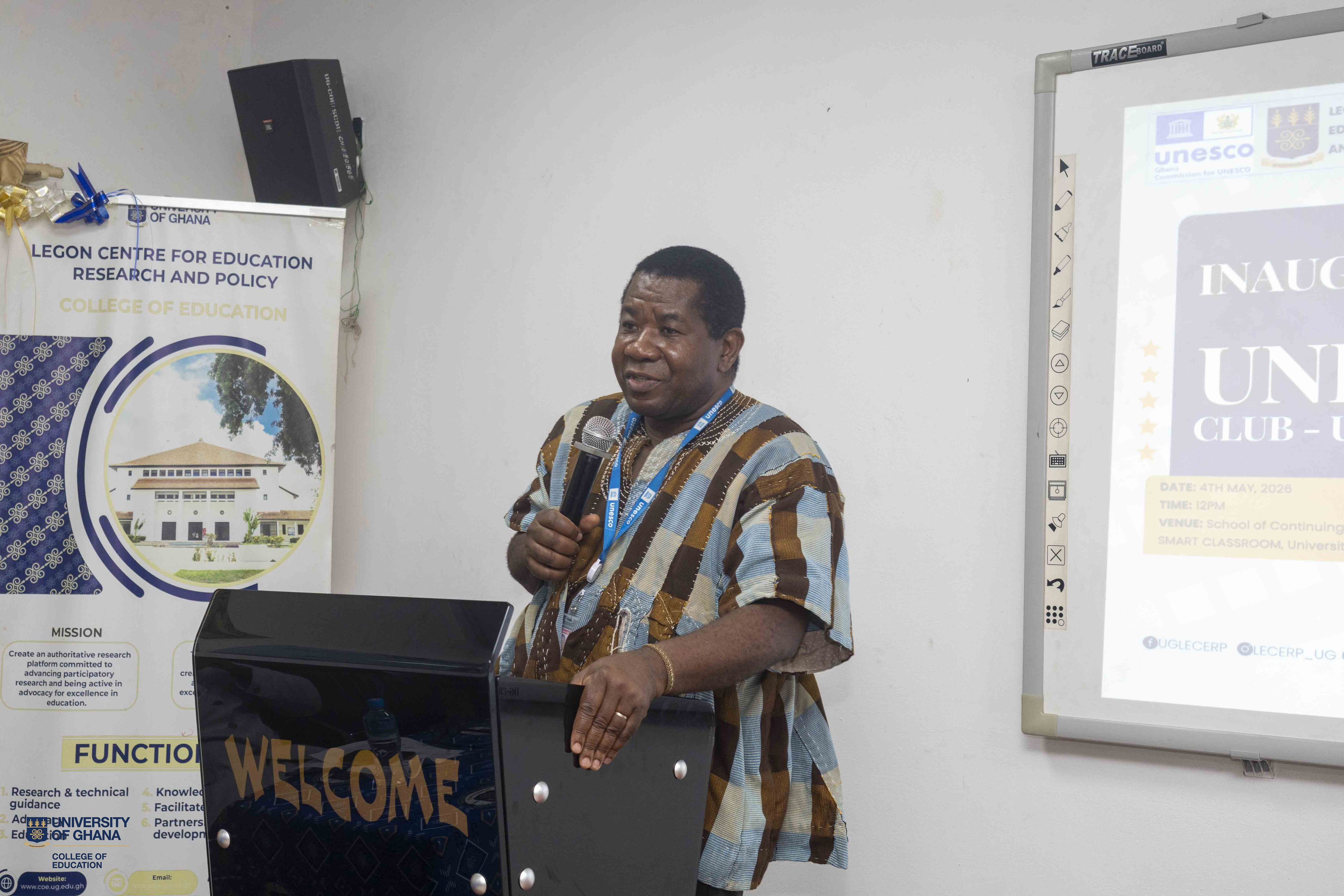
H.E. Edmond Moukala, UNESCO Representative to Ghana
In his remarks, H.E. Edmond Moukala, UNESCO Representative to Ghana, challenged students to see themselves not merely as future leaders, but as active agents of change capable of influencing society today.
Speaking against the backdrop of climate change, conflict, and growing inequality across the world, he stressed the importance of youth participation in shaping a more peaceful and sustainable future.
“Young people are the antidote to despair,” he remarked, adding that the creativity and energy of young people remain essential to advancing UNESCO’s global mission.
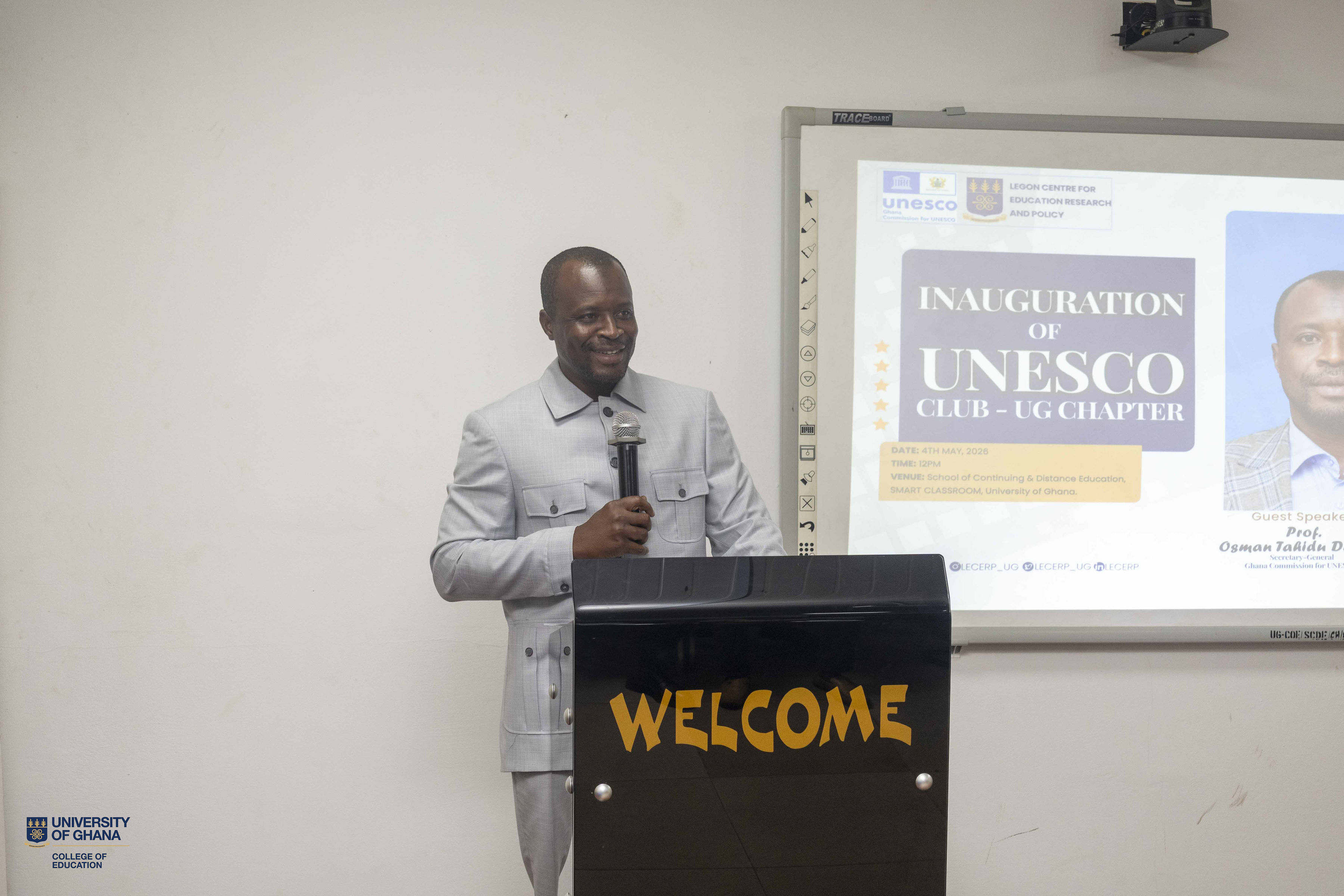
Prof. Osman Tahidu Damba, Secretary-General, Ghana Commission for UNESCO
The Secretary-General of the Ghana Commission for UNESCO and Guest Speaker for the ceremony, Prof. Osman Tahidu Damba, urged the Club to pursue practical and impactful initiatives, including debates, workshops, and youth fellowship programmes. He assured members of the Commission’s commitment to supporting the Club through mentorship and strategic collaboration.
Prof. Damba further described the Club as an incubator for leadership, innovation, citizenship, and value-based education, noting that it also provides opportunities for lecturers and academic staff to mentor students and strengthen research and community engagement.
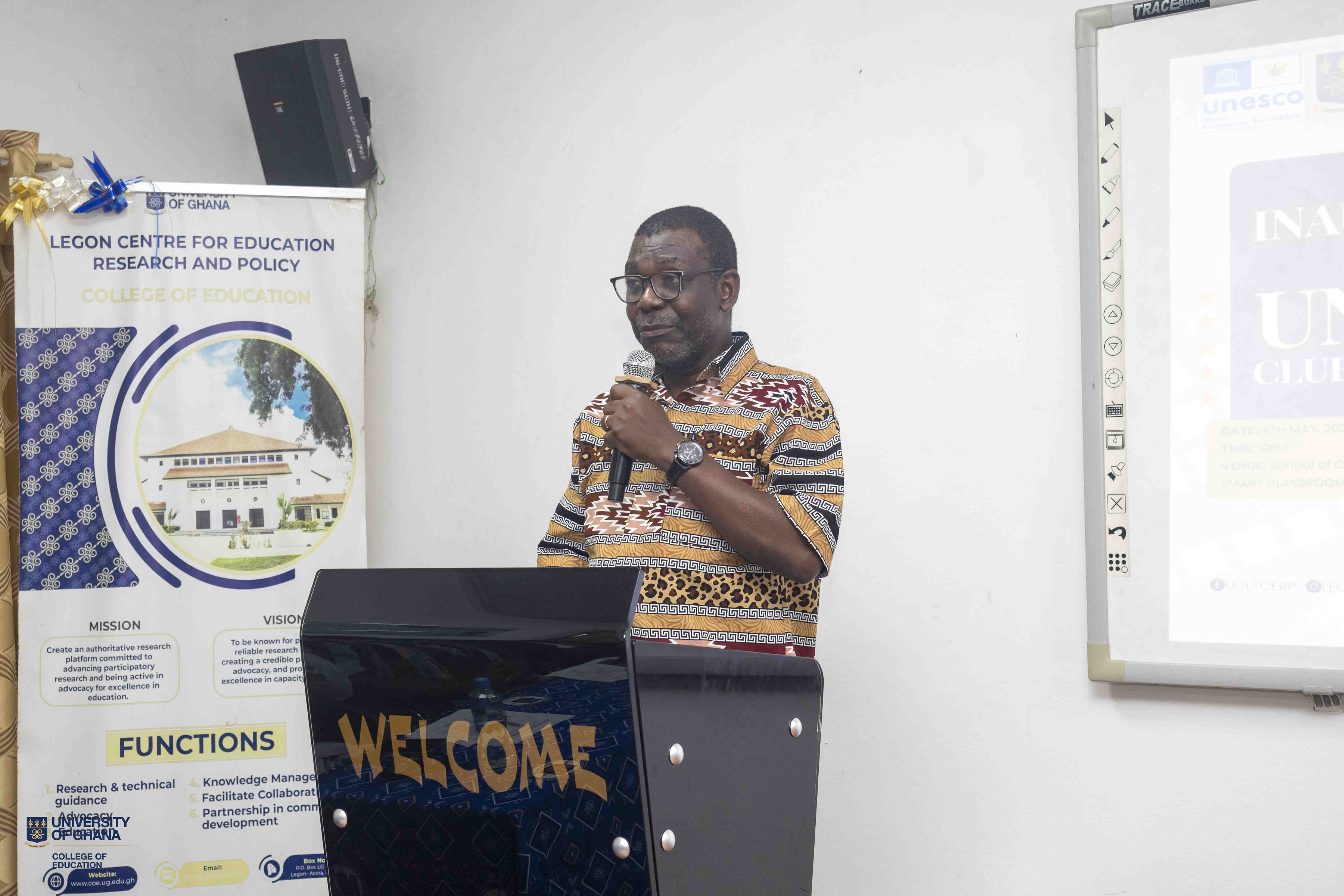
Mr. Joseph Oduro Nkansah, College Registrar
In a solidarity message, the College Registrar of the College of Education, Mr. Joseph Oduro Nkansah, reaffirmed the College’s commitment to supporting the initiative and commended LECERP for translating vision into action. He stated that education must extend beyond classroom instruction to include the nurturing of values, leadership and civic responsibility.
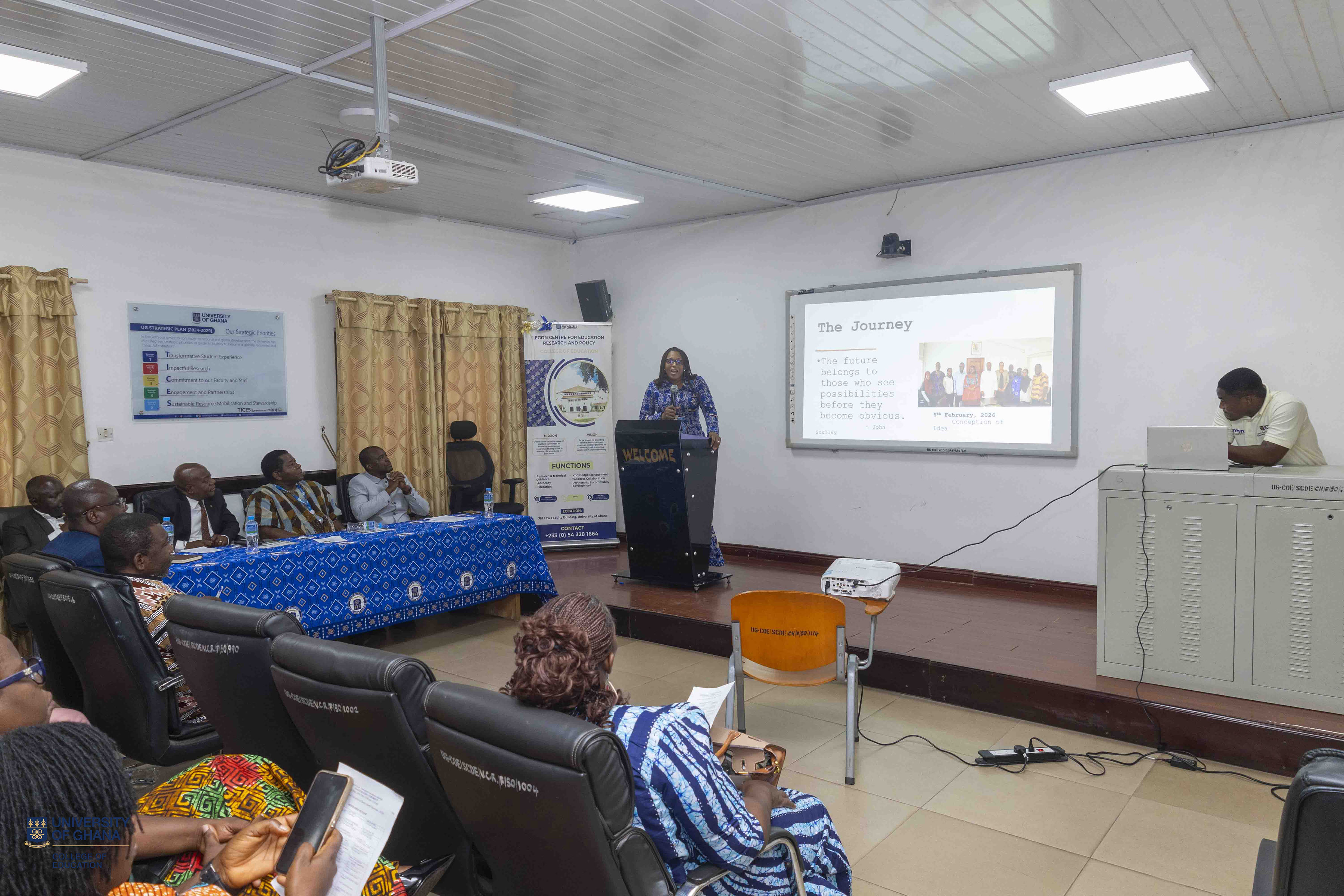
Dr. Joyce Anku, Senior Lecturer and Affiliate to the Centre making her presentation
As part of the ceremony, Dr. Joyce Anku, Senior Lecturer and Affiliate to the Centre, delivered a presentation tracing the journey of the UNESCO Club from its conceptualisation at LECERP to its formal establishment. Her presentation highlighted the mission, opportunities, and global relevance of the Club within the University community.
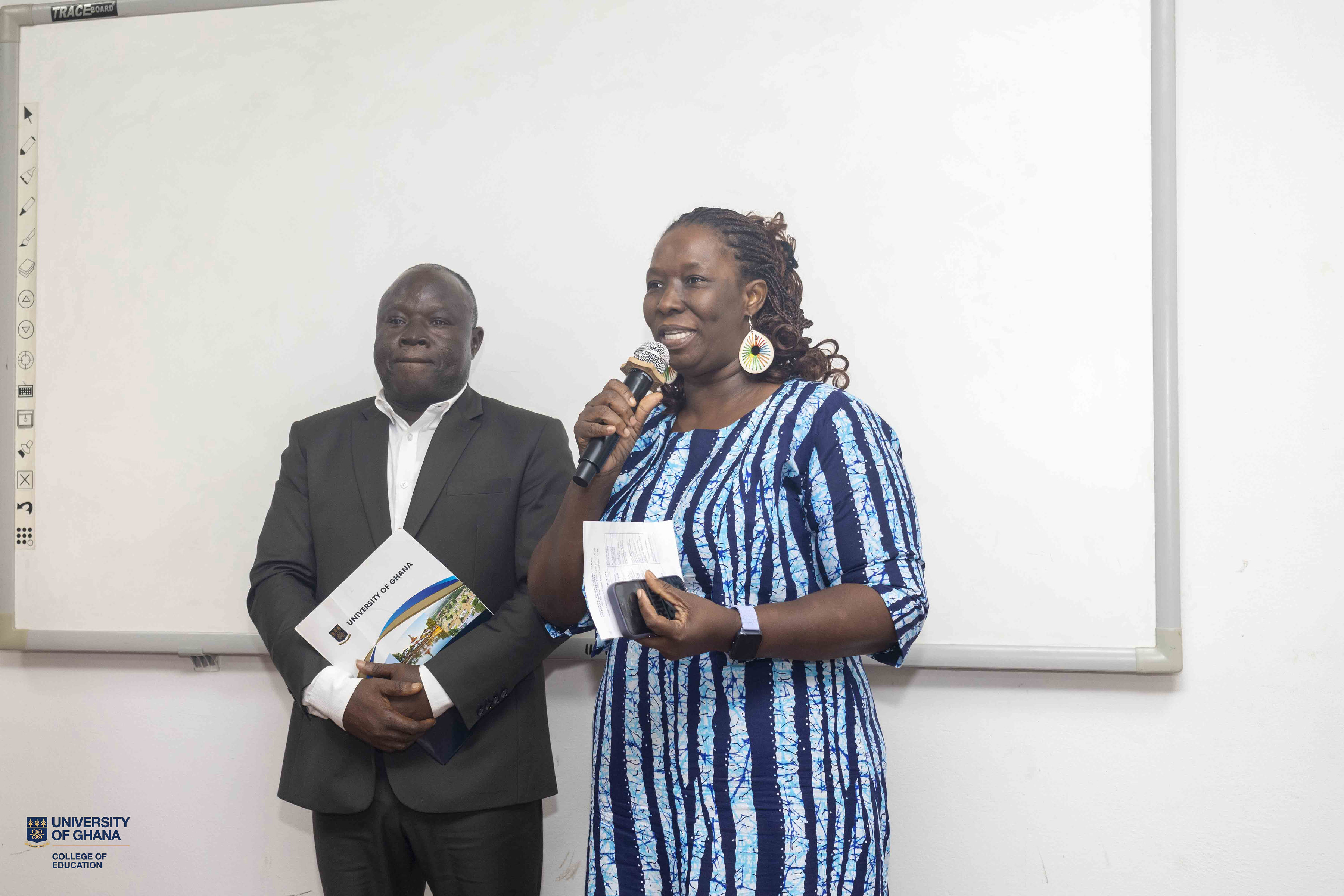
Rev. Aku Xornam Adzraku, Co-Patron of the Club, sharing reflections during the inauguration ceremony
The Co-Patron of the Club, Rev. Aku Xornam Adzraku, also shared reflections on the role student clubs played in shaping her academic and professional journey, encouraging students to take full advantage of the opportunities available through the initiative.
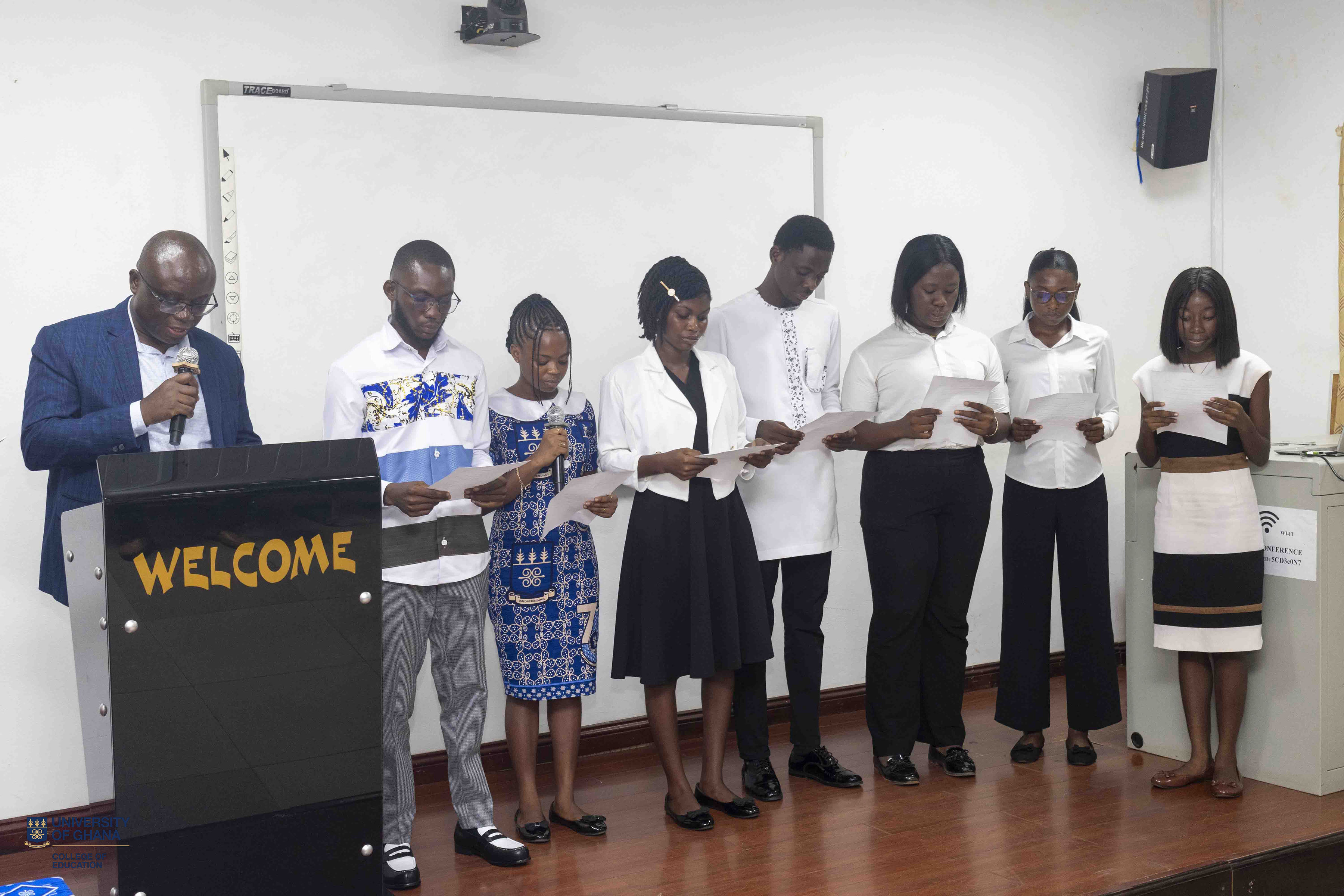
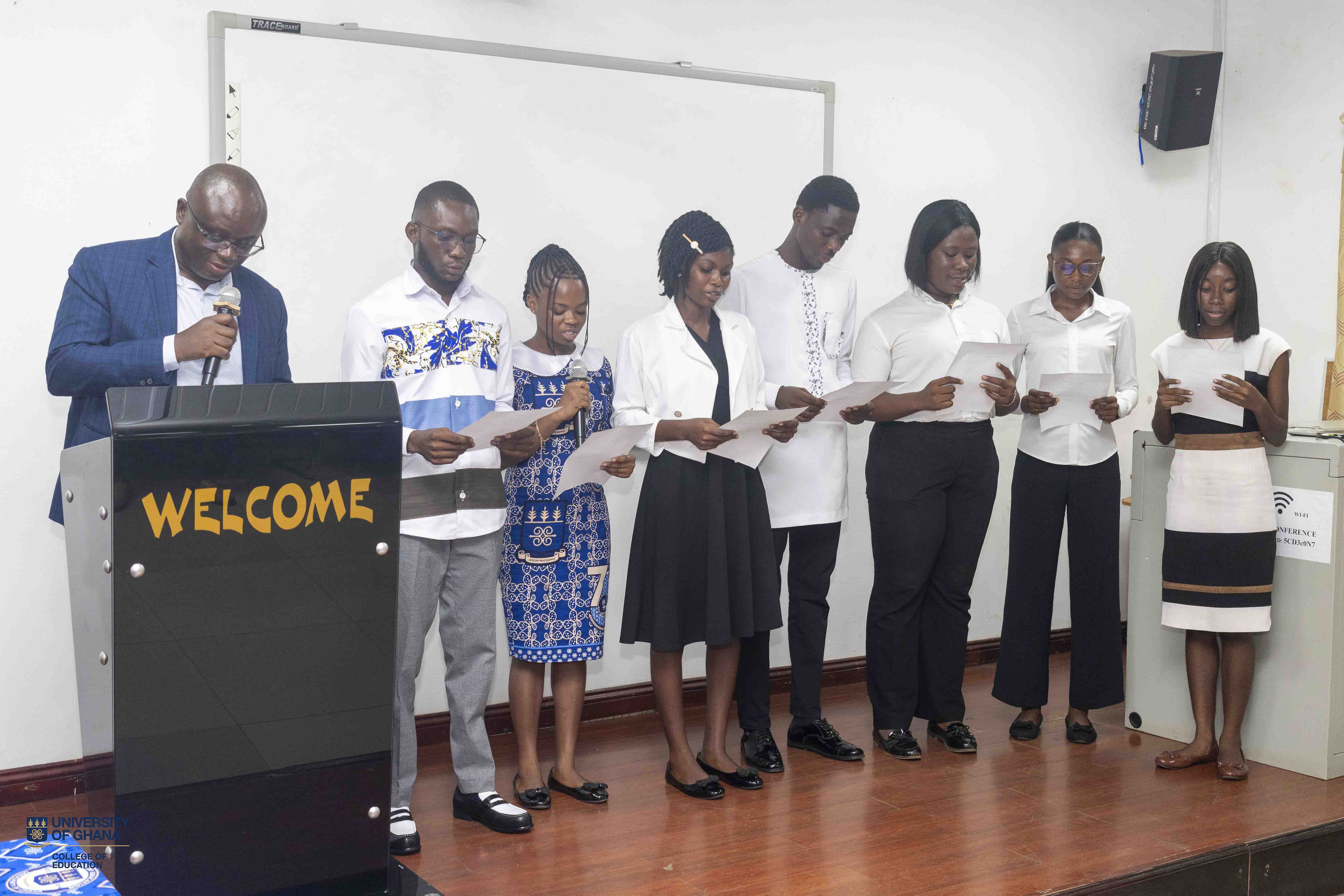
Mr. Prosper Nyavor administering the oath of office to the newly elected executives
One of the major highlights of the event was the swearing-in of the seven-member student executive team by Mr. Prosper Nyavor, Head of Education at UNESCO Ghana, officially ushering the new leadership into office.
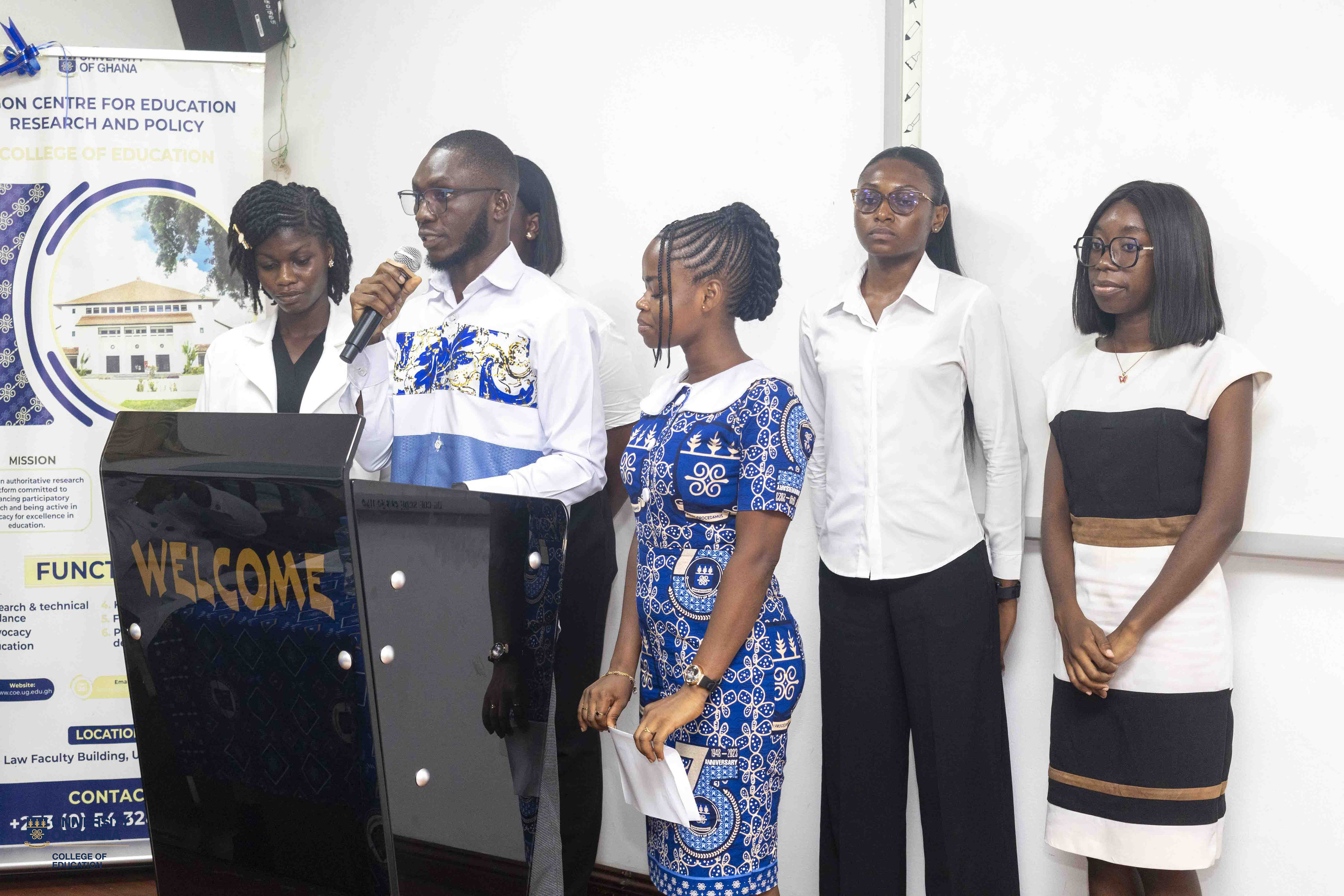
Mr. Emmanuel Johnson Egyire, newly elected President of the UNESCO Club - UG Chapter, delivering his inaugural remarks
In his inaugural remarks, the President of the UNESCO Club - UG Chapter, Mr. Emmanuel Johnson Egyire, expressed appreciation to stakeholders for their support and called on members to embrace purposeful and responsible leadership. Drawing inspiration from leadership philosophy and scripture, he underscored the importance of unity, service, integrity, and excellence in advancing the mission of the Club.
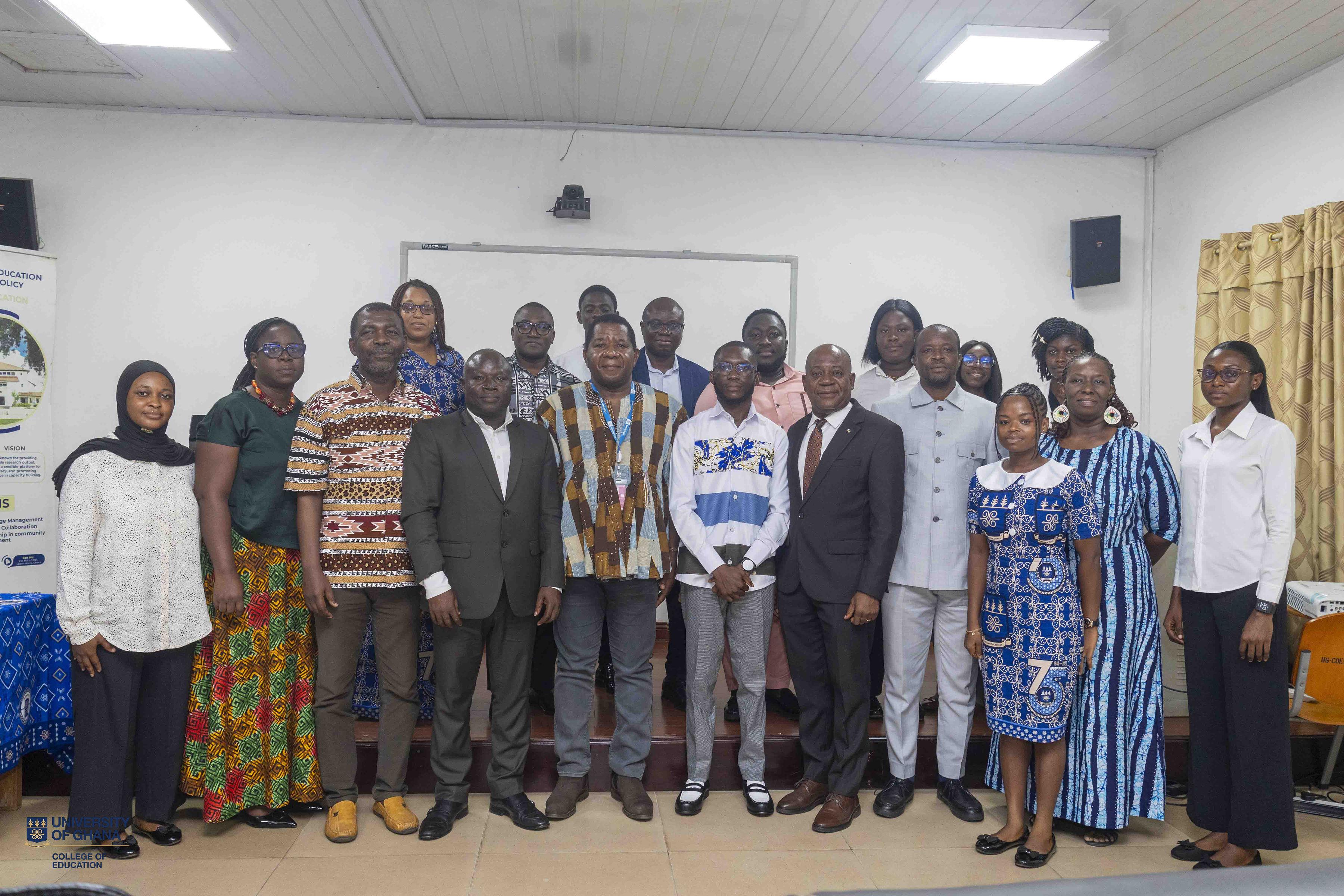
The inauguration places the University of Ghana within the expanding global network of UNESCO-affiliated student associations dedicated to advancing the Sustainable Development Goals (SDGs). With the 2030 deadline fast approaching, speakers at the event stressed the urgent need for greater youth participation in addressing some of the world’s most pressing challenges.